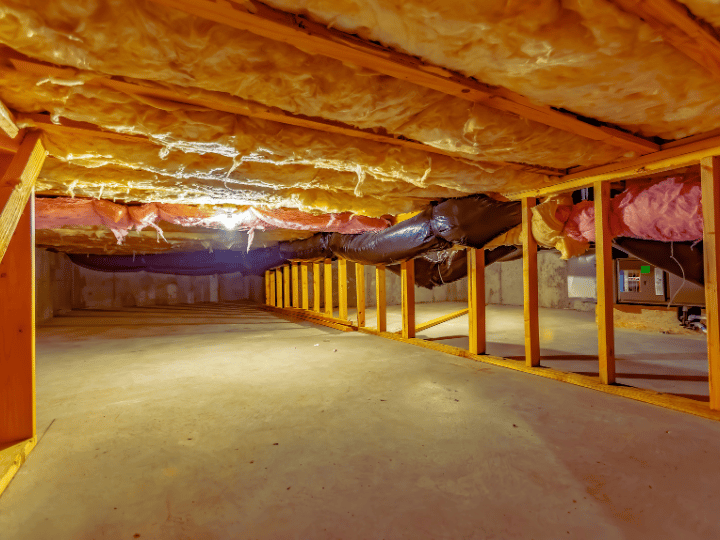
Fiberglass insulation relies on trapped air to slow heat transfer, so once it absorbs moisture it loses much of its insulating value and can hold dampness against the wood framing above it.
Soft crawl space insulation is prime nesting material for rodents, which is why removal so often reveals droppings, urine, and torn debris throughout the material rather than just on its surface.
Once insulation has been soaked, compressed, or contaminated by pests, it cannot be restored to its original performance, so proper removal and replacement is the practical fix rather than reinstalling old material.
Insulation under a house is supposed to hold heat where it belongs and keep the floors above comfortable. When it does its job, no one gives it a second thought. When it fails, it can do more harm than good, holding moisture, harboring pests, and dragging down the air quality of the whole home above it. For a lot of San Diego houses, the fix starts with crawl space insulation removal, clearing out the material that has stopped doing its job so the space can be restored properly.
Attic Guard handles this as a cleanup and insulation contractor, not an exterminator. The work is about taking out the compromised material safely, dealing with any contamination that comes out with it, and preparing the space properly for whatever replaces it. Homeowners across San Diego County, Orange County, and southwest Riverside County reach the same conclusion once they finally see what is under the floor: crawl space insulation removal is the honest first move when the old material has plainly failed.
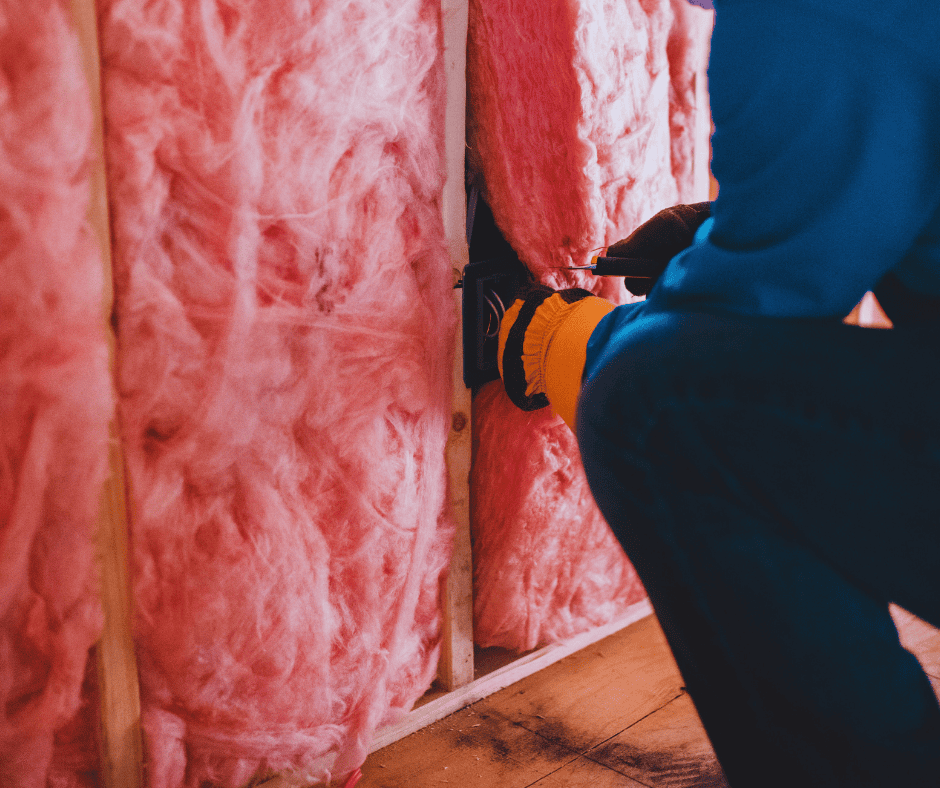
Insulation under a house lives in a harsh environment. Moisture from the bare soil and the coastal marine layer settles into it, and once fiberglass gets damp it loses much of its insulating value and begins to sag. Batts fall away from the floor joists and pile on the ground. Over the years, the material compresses, deteriorates, and becomes a damp, sagging mat rather than a thermal barrier, and by that point it is quietly working against the home instead of for it.
Rodents accelerate the decline. They favor the soft, sheltered material for nesting, and they leave droppings, urine, and torn shreds of debris behind throughout it. Contaminated insulation is not something to leave in place or reuse, both for health reasons and because it no longer functions. Crawl space insulation removal takes out the failed material entirely, which is the only real fix once insulation has been soaked, compressed, or fouled by pests under a San Diego home.
Failed crawl space insulation is not just an energy problem. When rodents have nested in it, the material holds droppings and urine that carry health risks, and disturbing it without care releases fine particles into the air. Because crawl space air rises into the living space, that contamination does not stay under the floor. It reaches the rooms where the family spends its time, which is why contaminated insulation is a genuine indoor air concern.
This is where careful removal matters. Pulling out contaminated insulation without proper equipment can spread the very particles that make it hazardous. Professional crawl space insulation removal uses HEPA extraction to capture fine debris and follows removal with cleaning and, where warranted, sanitizing. The point is to get the contamination out of the house entirely rather than stir it up, which protects both the crew doing the work and the family living above.
Removal starts with a free inspection. A technician goes under the house, documents the condition of the insulation with photos, and provides a written quote before any work begins. This shows the homeowner exactly what is down there, whether the insulation is simply spent or actively contaminated, and what the removal will involve. No two crawl spaces are the same, and the inspection sets the scope honestly.
The work itself is methodical. The old insulation is pulled from the floor joists and the ground below, bagged, and hauled out of the home entirely. HEPA extraction captures the fine particles that removal stirs up. The exposed space is cleaned, and where rodent contamination is present, sanitizing neutralizes bacteria and odor. Once crawl space insulation removal is complete, the framing and subfloor are visible and clean, ready for new insulation, a vapor barrier, air sealing, or rodent proofing as needed.
Removal is rarely the end of the story, because a bare crawl space still needs a thermal barrier and moisture control. With the old material gone, the space is finally in a condition where lasting improvements make sense. This is the moment to address the moisture and entry points that caused the problem, rather than covering them back up with new insulation and hoping for the best.
Most homeowners follow removal with fresh insulation to restore the thermal barrier under the floor. Many also add a vapor barrier to control ground moisture, air sealing to stop crawl space air from reaching the living space, and rodent proofing to keep pests from ruining the new material. Crawl space insulation removal clears the way for all of it, turning a failed, contaminated space into a clean foundation for a healthier, more efficient home.
Insulation under the floor does real work for a home's energy use, and when it fails the cost shows up on every utility bill. A crawl space with wet, sagging, or missing insulation lets heat move freely between the ground and the living space. In winter the floors run cold and the heating works harder; in San Diego's warmer months the cooling fights the same losing battle. The result is a home that never quite feels comfortable and costs more to condition.
Homeowners often chase this problem in the wrong places, adjusting the thermostat or blaming the HVAC system, when the real issue is under the floor. Failed insulation cannot be fixed by turning up the heat. Crawl space insulation removal, followed by fresh material, restores the thermal barrier that keeps conditioned air where it belongs. For many San Diego homes, that under-floor work delivers a comfort and efficiency improvement that no amount of thermostat adjustment ever could.
San Diego's climate plays a direct role in why crawl space insulation fails. The coastal marine layer carries humidity that settles into the still air under a house, and the bare soil common in older crawl spaces releases ground moisture upward. That dampness soaks into fiberglass insulation, and wet insulation is failed insulation. Inland areas are drier, but the temperature difference between the cool ground and the warm house still draws moisture into the space.
This is why removal alone is only part of the answer. Taking out wet insulation without addressing the moisture source means the new material will eventually suffer the same fate. A thorough approach pairs crawl space insulation removal with moisture control, typically a vapor barrier over the soil, so the replacement insulation stays dry and effective. Understanding the moisture cycle is what separates a lasting fix from a temporary one under a San Diego home.
Homeowners do not need to crawl under the house to suspect a problem. Cold floors in winter, rooms that never hold a steady temperature, and rising energy bills all point toward failed under-floor insulation. A musty smell in the home, especially near floor vents or in ground-floor rooms, suggests moisture and possible contamination below. Any sign of rodent activity, from droppings to scratching sounds, raises the odds that the insulation has been fouled.
These signals are worth acting on, because the underlying problem only worsens with time. Insulation that has begun to fail keeps degrading, moisture keeps spreading, and any rodents keep nesting and multiplying. A free inspection settles the question by showing the actual condition of the material. When the inspection confirms failure, crawl space insulation removal is the starting point for restoring the space, and the sooner it happens the smaller the eventual job.
Crawl space insulation removal is not a comfortable do-it-yourself project. It means working in a tight, dirty space, handling material that may be contaminated with rodent waste, and dealing with the fine particles that removal stirs up. Without HEPA extraction and proper handling, a homeowner risks spreading contamination through the house and exposing themselves to health hazards in the process. The confined conditions alone make the work difficult and unpleasant.
A licensed contractor brings the equipment, training, and accountability the job requires. The work is documented with photos, the scope is confirmed in writing, and the contamination leaves the house properly rather than getting redistributed. Attic Guard approaches this as a cleanup and insulation contractor, not an exterminator, focused on safe removal and restoration. For most San Diego homeowners, professional crawl space insulation removal is the sensible choice given the health, safety, and access challenges involved.
It helps to see insulation removal not as an isolated task but as one stage in restoring a crawl space to health. The failed insulation is usually a symptom of deeper conditions: moisture from the soil, gaps that let pests and outside air in, and sometimes damaged ductwork adding to the mess. Removing the insulation exposes all of it, which is exactly why the moment of removal is the right time to plan the rest of the work.
A coordinated approach treats the crawl space as a system. Removal clears the failed material, cleaning and sanitizing handle any contamination, a vapor barrier controls the ground moisture, air sealing closes the paths between the crawl space and the living area, rodent proofing shuts the entry points, and new insulation restores the thermal barrier. Handled together by one contractor, these steps reinforce each other. Removal is the natural starting point, opening the space so the rest can be done right.
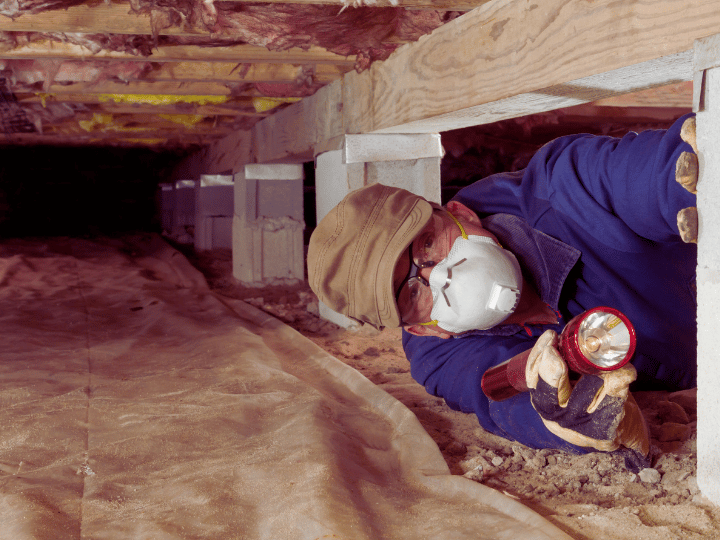
A removal project is more straightforward than many homeowners fear. The crew arrives, protects the access point and the path through the home, and sets up the extraction equipment. Working in the crawl space, they pull the old insulation from the joists and the ground, bag it, and carry it out, capturing fine particles with HEPA extraction as they go. The exposed space is then cleaned and, where needed, sanitized.
Throughout, the work is documented so the homeowner can see the before and after without going under the house themselves. A good contractor explains what was found, what was removed, and what the space needs next, in plain terms rather than jargon. That clarity is part of the value. By the end of the day, the work has turned a failed, contaminated space into a clean, open foundation ready for whatever improvements come next.
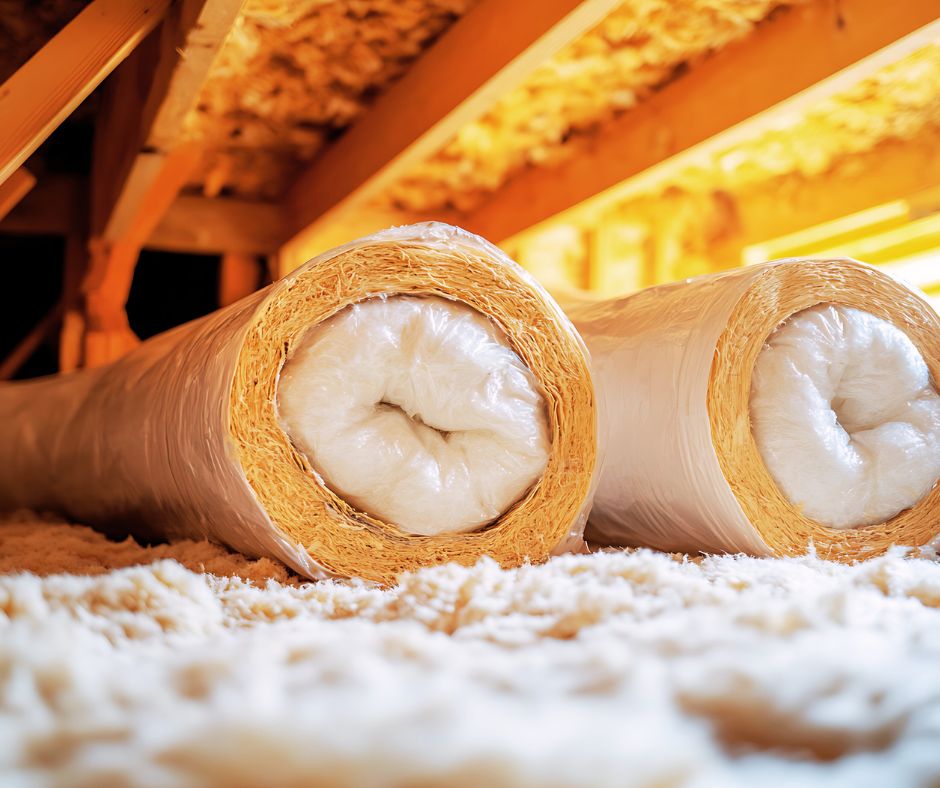
There is a real benefit to clearing a crawl space completely rather than patching around old material. A bare, clean space can be inspected fully, sealed properly, and insulated evenly, without the gaps and cold spots that come from working around failed batts. It also removes the contamination and moisture-holding material that quietly worked against the home, giving the house a genuine reset from the ground up.
For a homeowner, that fresh start pays off in comfort, air quality, and efficiency that all trace back to a single decision. Once the failed material is gone and the space is restored, the floors hold their temperature, the air upstairs is cleaner, and the home costs less to condition. Removal is the unglamorous first step, but it is the one that makes every improvement above it actually work.
The decision to remove old crawl space insulation usually comes down to seeing its real condition. A free inspection with photo documentation makes that easy, showing whether the material has failed and what removal would involve, with a written quote and no hidden fees. Financing is available for larger projects, and current specials, which are always worth confirming first, can help make the work more manageable.
Attic Guard serves San Diego and the surrounding counties from its Escondido shop, licensed through the California State License Board (CSLB #1138505) and family owned rather than a national chain. Any homeowner who suspects their under-floor insulation has failed can schedule a free inspection by calling (858) 330-6197 to see the real condition and plan the removal.